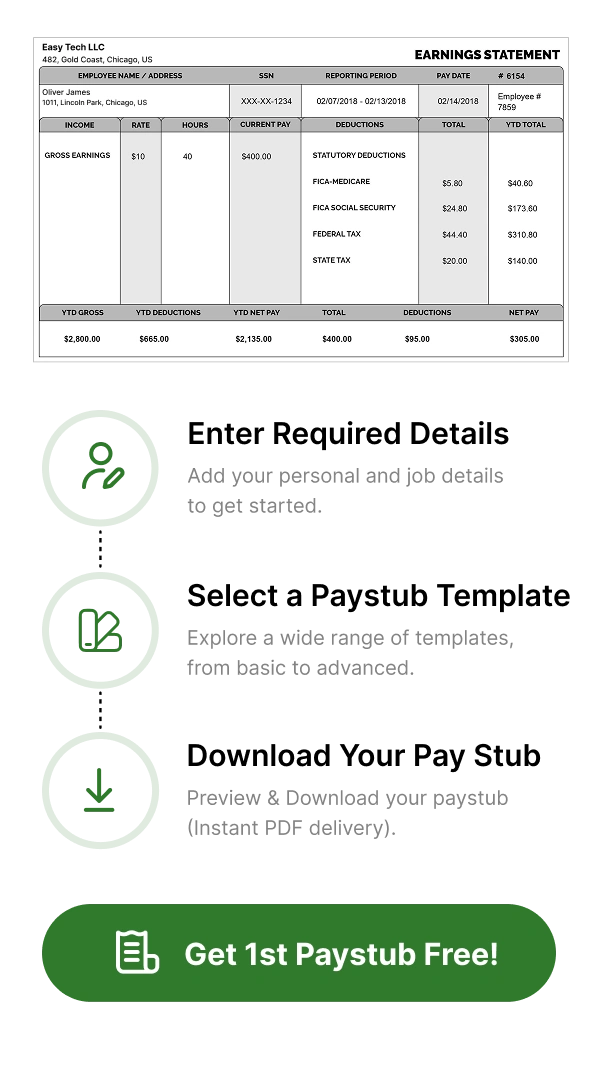
Each time you get paid, you most likely just look at the last figure, the sum that has been deposited into your bank account, and then you forget about it. Though if you have ever taken your time to examine those other figures on the pay stub, you may have even seen a section marked YTD and wondered what YTD meaning in paycheck is?
It may look like a mere three-letter acronym, but in fact, this is packed with insights that most employees take for granted. If you are estimating your income and expenses for the year, getting your tax documents in order, checking if the salary payments are correct, or filling out a loan application form, knowing what YTD stands for is one of the most essential financial literacy skills you can acquire. Creating pay stubs doesn’t have to be complicated when you have access to a trusted free paystub generator. This blog explains everything in a simple, comprehensive, and accurate manner.
What does YTD mean on a Pay Stub?
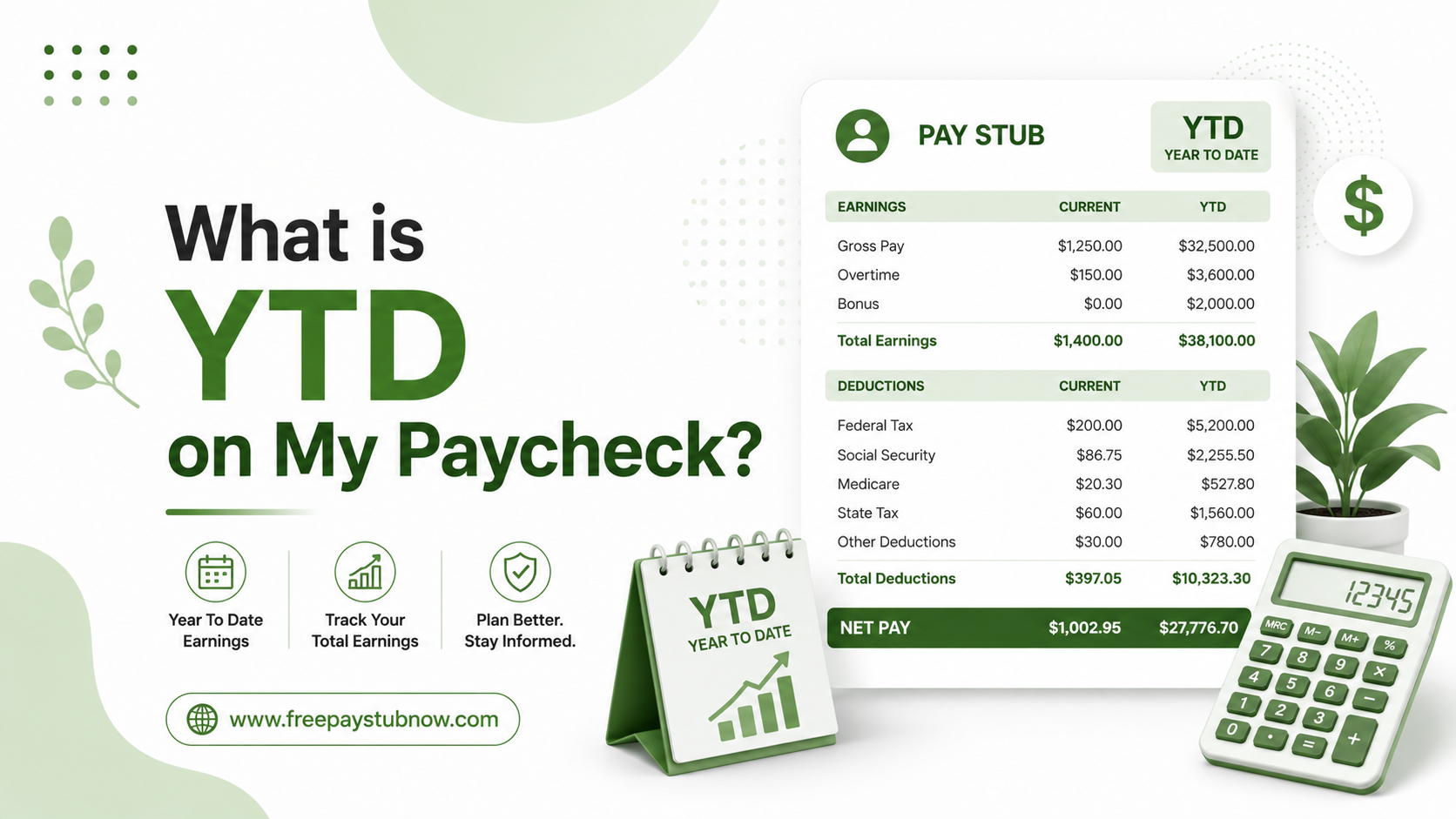
YTD stands for Year-to-Date. When you see it on your paycheck or pay stub, it represents the cumulative running total of a specific figure, earnings, deductions, or taxes from January 1 of the current calendar year up to the date of your most recent paycheck.
So what does YTD mean in plain English? Think of it as a scoreboard that maintains updates every pay period. Every time you get paid, your YTD total goes up. Your YTD figures as of December 31 form your complete financial picture for the entire 12 months.
What is the YTD Amount? Breaking down YTD Taxes
What is the YTD amount? The answer depends on which YTD line you are looking at. Most of the pay stubs showcase 3 primary YTD figures:
1- YTD Gross Pay
This is the total amount you have earned before any taxes are taken out. It includes:
- Your regular wages
- Overtime pay
- Commission and bonus
- Tips and other taxable compensation
- Imputed income
Related Reading: Learn more about the differences in Gross Pay vs Net Pay.
2- YTD Deductions
YTD deductions are the total of everything withheld from your paychecks since 1st January. This includes:
- Federal income tax (FIT)
- State and local income taxes
- Social Security tax
- Medicare tax
- Health, dental, and vision insurance premiums
- 401(k) or other retirement contributions
- Health Savings Account (HSA) contributions
- Union dues or other voluntary deductions
3- YTD Net Pay
Take-home pay is the total that you have been left with and received each year after all taxes and deductions are taken out of your gross wages. It is the total of all the net figures from each paycheck that you have received so far in the current year.
What does YTD mean on payslip?
YTD on a payslip stands for Year-To-Date. It shows the full total of specific earnings or deductions from the beginning of the calendar year up to the current pay period. For example, if your payslip shows:
- Gross pay (Current): $2,000
- Gross pay (YTD): $24,000
This means that you have earned $2,000 during the current pay period and $24,000 in total since January 1 of the current year.
Salaried employee: These employees generally see stable synchronous time units, so that YTD data is cleared to assignment. Multiply your gross salary corresponding to the period by the multiple differences that have been exceeded, and you need to get your YTD gross.
Hourly employee: Hourly employees may also see more versions in modern-day benefits because of fluctuating hours, overtime, or shift differences. YTD data are particularly beneficial right here because they replicate every form, not just unmarried, in all likelihood abnormal, salary length.
Freelancers: Freelancers who generate their own pay stubs will use YTD to track accrued benefits for hypothetical tax bills, as they are responsible for paying their individual FICA taxes quarterly.
Common YTD figures on a payslip include:
- YTD Gross Pay: Total earnings before deductions.
- YTD Net Pay: Total take-home pay received.
- YTD Federal Income Tax (FIT): Total federal taxes withheld.
- YTD Social Security Tax: Total Social Security contributions.
- YTD Medicare Tax: Total Medicare contributions.
- YTD Retirement Contributions: Total amounts contributed to retirement plans.
Why YTD Figures Matter? Top 5 reasons
Below is where this knowledge becomes popular:
- Tax Preparation: Each January, your W-2 form, issued through your organization, reflects your annual total. YTD gross pay for the year. You need to carefully fill in Box 1 (Salary, Tips, Other Compensation) on your W-2 for your final pay stub. Checking this before tax season helps trap payroll errors early.
- Loan and Mortgage Applications: Lenders often ask for proof of year-to-date benefits. Your pay stub’s YTD benefits serve as the most modern, respected document of what you earned and received more recently than the W-2, which most easily captures the 12 months from the past.
- Verifying Payroll Accuracy: Payroll errors occur. If you keep track of your profits and how many pay periods have passed, you can quickly verify if your YTD gross is accurate. Catching discrepancies in advance before year-end W-2s are issued makes corrections somewhat less complicated.
- Annual Budgeting and Financial Planning: YTD numbers provide an up-to-the-minute insight into your financial path. Comparing YTD earnings versus YTD deductions reveals to you the precise share of your earnings that goes toward taxes and benefits. This is very important information for changing your withholding, boosting your retirement contributions, or working out your budget.
- Tracking Tax Caps and Milestones: Some tax deductions are limited and will not continue once you cross certain thresholds. One example is the withholding of Social Security tax (6.2%), which will cease in 2026 when your year-to-date (YTD) wages reach $184,500. If you are closely monitoring your YTD Social Security wages as they near the limit, you will realize that you will receive more net pay in the last part of the year, which can be quite significant for those earning more.
How to calculate your own YTD figures?
Below, we have mentioned the calculation of your own YTD figures:
1- Calculate YTD Gross Pay
Add together all of your gross earnings from the beginning of the year.
Formula: YTD Gross Pay = Sum of all gross pay earned since January 1.
2- Calculate YTD Net Pay
Add all the net pay amounts (take-home pay) from each paycheck.
Formula: YTD Net Pay = Sum of all net pay received since January 1.
3- Calculate YTD Tax Withholdings
Add all taxes withheld from your paychecks throughout the year, such as:
- Federal Income Tax (FIT)
- State Income Tax (if applicable)
- Social Security Tax
- Medicare Tax
Formula: YTD Tax = Total taxes withheld from all paychecks since January 1
4- Calculate YTD Deductions
Add them up with all the non-tax deductions, which include:
- Health insurance premiums
- Dental or vision insurance
- Retirement contributions (401(k))
- HSA/FSA contributions
- Other voluntary deductions
Formula: YTD Deductions = Total deductions taken from all paychecks since January 1
Key Takeaways
Understanding the YTD meaning on a paycheck is not complicated at all when you know what to trace back to: it is your current cumulative total for the year, refreshed with each paycheck. However, the doors opened by comprehending those figures are far from insignificant. Among other things, payroll checking, accurate tax return filing, and financial year scheduling are the main functions for which the YTD numbers on your pay stub act as the most practical resource points that you, as an employee, get.
Frequently Asked Questions
1) What is a pay period in YTD?
On a pay stub, YTD stands for Year-to-Date. This represents the total amount of your income, taxes, and deductions from the beginning of the calendar year for the 12 months to your current day’s payday.
2) What is YTD on your paystub?
The YTD on the pay stub indicates total pay or earnings from the beginning of the contemporary calendar to the current pay period. Most pay stubs include a running general of YTD earnings along with gross pay and net pay.
3) Does YTD mean the last 12 months?
No, YTD (Year-to-Date) is not the last 12 months.
4) What is a good YTD return?
A desirable year-to-date (YTD) return depends on your asset allocation, but in general, beating the broader market benchmark with the S&P 500 is considered the ultimate measure of fulfillment for portfolio investors.
5) Why does my W-2 not match my YTD?
They may also reflect extraordinary salaries. Year-end pay stubs will show the entire, or gross, benefit received by the worker, while the W-2 is a precise record of the taxable earnings received within the calendar year.
6) How does YTD affect my bonus?
YTD gross amount covers all your paychecks from January 1 up to the current pay period, it also includes bonuses, overtime, and commissions that you may not consider as regular income. If the YTD gross seems to be higher than expected, then a one-time payment (bonuses, stock vesting, commission) could be the reason that is reflected in a single paycheck without your knowledge.
7) Why is YTD on pay slips?
This part gives you a brief overview of your total earnings and deductions for the year to date. It’s useful to review your gross income, and the taxes, superannuation, and other amounts that have been withheld from your pay.
8) Is YTD gross or net pay?
YTD (Year-To-Date) can be both gross or net pay, depending on what specific metric you are looking at. Pay stubs typically list both.
9) What does year to date mean?
Year to Date (YTD) refers to the time period beginning on the first day of the current calendar or fiscal year and extending up to the present day.
10) What is ytd amount?
Year to date information can be used to understand a company’s earnings, net pay, or investment returns before the year is over. The YTD financial statements can be analyzed to determine the financial health of the business and how it compares to other similar companies.