What Is FIT (Federal Income Tax)? Guide for Employers

Running payroll is essentially all about FIT, the acronym that appears on every single paycheck stub you issue. Still, a lot of people, even employers, small business owners, HR managers, and new payroll administrators, are not very sure what a tax FIT really means, how it is calculated, and what the legal obligations about it actually are.


This is a guide that explains what FIT withheld is, the working of the FITW tax in reality, the usage of money collected through the tax, and precisely how the employers should behave with it in 2026. It is not negotiable for payroll compliance to get to know the meaning of FIT tax, whether you are joining your first employee or growing a team of hundreds.


What is Federal Income Tax Withholding?

Federal Income Tax Withholding (FIT) is the tax levied by the U.S. federal government on the taxable income of individuals. For employed workers, FIT is collected via a withholding system from where employers deduct a particular amount from each employee’s gross wages every pay period, and it sends the money directly to the IRS on the employee’s behalf.


FIT is a revolutionary tax, which means that as taxable earnings increase, so does the price. The machine runs through seven tax brackets from the bottom 10% to the top 37%, and the amount withheld from each paycheck is decided through the worker’s filing status, gross wages, and elections for the W-4 on the IRS form.


What is FIT on my paycheck?

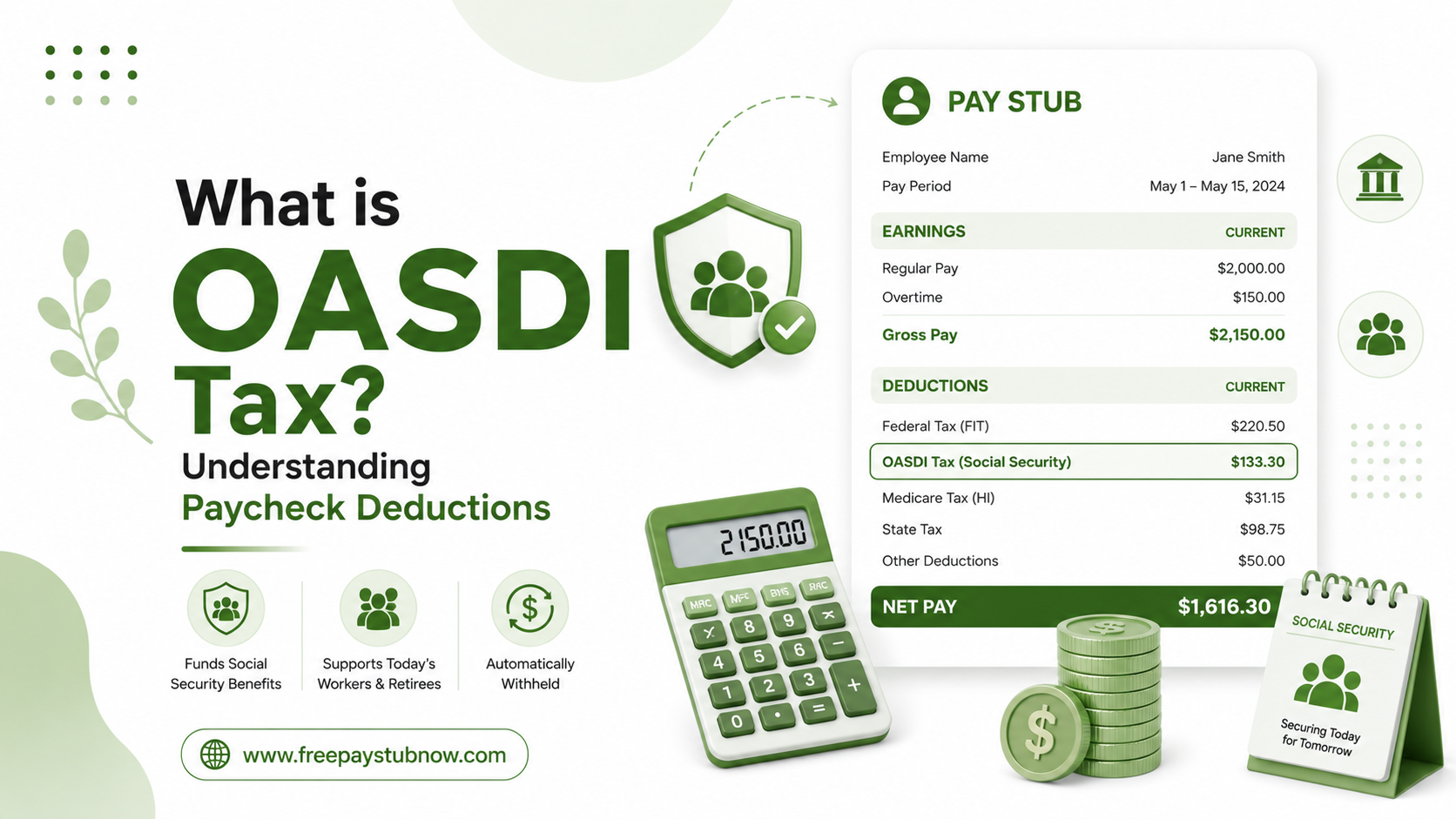
Federal Income Tax (FIT) is a tax on income collected by the government. It is the segment of your salary that your employer subtracts from your paycheck and sends directly to the Internal Revenue Service (IRS) for you. Tax withholding is obligatory for most employees in the US, and it is a way to ensure that the income tax is paid during the year and not at one time when the tax return is filed.


The FIT withheld from your paycheck depends on your income, filing status, pay frequency, and the information you enter on the Form W-4. Generally, people with higher earnings will have more federal income tax taken out of their pay, while individuals who qualify for certain deductions or tax credits may have less withheld.


FIT withholding represents an advance payment toward your total federal income tax liability. Upon filing your federal tax return, the IRS checks if the total FIT withheld during the year is the same as the amount of tax you owe. If too much tax were withheld, you would get a refund. If too little was withheld, you have to pay the difference.


FIT is a deduction from payroll that ensures that workers fulfill their federal tax duties by distributing tax payments over the year via regular paycheck withholdings.


What are FITW Taxable Wages?

You might see various variations on paycheck stubs:


  • FIT: Federal income tax
  • FITW: Federal income tax withholding
  • FIT withheld: Dollar amount of federal income tax deducted from a particular paycheck


They all talk about the same fundamental obligation. When payroll workers inquire what the FITW tax is, they are really discussing the federal income tax withholding program, a system through which employers deduct federal income tax from employees’ wages and pay it to the government regularly, instead of the employees paying a single time at the end of the tax year.


The federal income taxes that are withheld from your paycheck are used to pay for what?

Federal income taxes withheld from employee paychecks fund the general operating budget of the U.S. federal government. Unlike FICA taxes, which are marked for specific programs like FIT revenue, into the general fund of the U.S. Treasury.


FIT revenue helps pay for:


  • National defense and military: Largest single discretionary expense in the federal budget
  • Federal infrastructure: Bridges, airports, and transit systems
  • Federal education programs: Pell Grants, Title I school funding, and student loan administration
  • Scientific research and innovation: Through agencies like the NIH, NASA, and the NSF
  • Federal law enforcement and judiciary: FBI, federal courts, and the Department of Justice
  • Federal government operations: The legislative, executive, and judicial branches
  • Interest on national debt: A growing portion of federal expenditure each year
  • Means-tested assistance programs: Such as SNAP, Medicaid (federal share), housing assistance, and the Earned Income Tax Credit


FIT Tax vs FICA Tax: Major Differences


Features FIT Tax FICA Tax
What it funds General federal government operations Social security & Medicare programs
Rate structure Progressive Flat
Who pays Employee only Both employee and employer
Based on W-4 Yes No
Wage-base limit No Yes
Employment match No Yes


How FIT taxable wages work: Employer’s Step-by-Step Process

How FIT is calculated is vital for payroll accuracy. Below is a step-by-step process:


1) Collect Form W-4 from every new hire

Every new employee must complete IRS Form W-4 (Employee’s Withholding Certificate) before their first paycheck. The redesigned W-4 captures the following:


  • Personal information and filing status
  • Multiple jobs
  • Dependents being claimed
  • Extra withholding requests


2) Determine the Employee’s Taxable Wages

Employers must:


  • Add any taxable fringe benefits
  • Subtract any pre-tax deductions, such as traditional 401(k) contributions, HSA contributions, or pre-tax health insurance premiums


3) Apply the IRS withholding tables

Wage Bracket Method: A research table that gives accurate withholding amounts primarily based on employee salary, frequency of pay, and submission reputation. This is a simpler technique and is widely used for guiding payroll structures.


Percentage Method: Formula-based total technique adapted using automated payroll structures. The company annualizes the employee’s salary, applies the cell size, and then converts the resulting lower amount back to the withholding amount by period.


4) Deposit Withheld FIT to the IRS

Employers must deposit federal income tax withholding (alongside FICA taxes) using the Electronic Federal Tax Payment System (EFTPS). The deposit schedule, month-to-month or semi-weekly, is determined through the enterprise’s lookback length and tax legal obligations:


  • Monthly depositors: Employers whose total tax liability during the lookback period was $50,000 or less.
  • Semiweekly depositors: Employers whose total tax liability exceeds $50,000 during the lookback period.


5) Report FIT on Form 941

Form 941, Employer’s Quarterly Federal Tax Return, is the quarterly tax return most employers are required to file with the IRS to report total wages paid, total federal income tax withheld, and FICA taxes due. Though small employers (usually those whose annual tax liability is $1,000 or less) can be eligible for filing the Form 944 only once a year.


6) Issue Form W-2 by January 31

By year’s end, employers need to provide employees with Form W-2, Wage and Tax Statement, no later than January 31 of this year. Box 2 of Form W-2 reports total FIT withheld from the employee’s pay during the year. This amount is what the employee refers to while filing the personal income tax return to check if more tax needs to be paid or a refund is due.


Whether you’re issuing your first paycheck or running payroll for a growing team, you can create accurate, compliant pay stubs in minutes with our free paystub generator. Each stub clearly displays FIT withheld alongside gross wages, deductions, and net pay, so both you and your employees can see exactly where the money goes.


2026 Federal Income Tax Brackets: What Employers Need to Know

At least initially, withholding calculations in 2026 are based on the seven federal income tax brackets set by the IRS through annual inflation adjustments. With the enactment of the One Big Beautiful Bill Act (OBBBA) in July 2025, one of the parts of that bill made permanent the individual tax provisions of the Tax Cuts and Jobs Act, so the 2026 rate structure does not change from the present.


Taxable income Tax rate
Up to $11,925 10%
$11,926 – $48,475 12%
$48,476 – $103,350 22%
$103,351 – $197,300 24%
$197,301 – $250,525 32%
$250,526 – $640,600 35%
Over $640,600 37%


For married filing jointly, the thresholds are approximately double the single filer amounts, with 37% brackets starting from $768,700.


Standard deduction for 2026:


  • Single / Married Filings Separately: $16,100
  • Married Filing Jointly: $32,200
  • Head of Household: $24,150


These increases mean many employees will have modestly lower FIT withheld per paycheck in 2026 compared to prior years, assuming their income has not increased substantially.


FIT Withheld on Supplemental Wages & Bonuses

When paying bonuses, commissions, or other supplemental wages, the FIT withholding rules differ from regular wages:


  • Flat rate method: Employers can also withhold a flat 22% of supplemental pay paid separately from regular pay, such as cumulative supplemental pay of $1 million in aggregate over the course of the year.
  • 37% mandatory rate: Supplemental pay over $1 million in a calendar 12 months is essentially a 37% federal earnings tax withholding concern.
  • Aggregate method: If the bonus is paid with the daily wage within the same paycheck, it would be treated as part of the daily revenue, and the blended amount is issued in the day-to-day withholding tables.


Generally speaking, the 22% flat rate is the standard option for separate bonus payments to employees. But in case the employee falls under a lower tax bracket, then it will lead to over-withholding, which the worker will be able to get back as a refund after filing their tax return.


Common FIT Withholding Mistakes Employers Make


1) Using an outdated W-4 without the Computational Bridge: If an employer employs workers who handed in W-4s before 2020, the employer has no choice other than either to use the IRS computational bridge or to request another form from the employees. Simply using the old withholding allowance logic on the current payroll tables will give wrong results.


2) Misclassifying employees as independent contractors: Independent contractors (1099-NEC) are not subject to FIT withholding through hiring transactions. But misclassifying the worker as a contractor means that the FIT is by no means closed, leaving the enterprise exposed to huge back taxes and legal obligations, penalties, and liabilities.


3) Failing to Withhold on Non-Cash Compensation: Section 61, IRS Code, specifies that non-cash benefits like personal use of a company car, group-term life insurance coverage in excess of $50,000, or taxable gifts are treated as taxable income and must be factored into the FIT withholding computations.


4) Missing Deposit Deadlines: The IRS levies fines for late FIT deposits, starting at 2% for amounts deposited 1-5 days late and going up to 15% for amounts not paid more than 10 days after the first IRS notice. It is essential for employers to be aware of their deposit schedules and to utilize EFTPS.


5) Incorrect Handling of Mid-Year W-4 Changes: If an employee submits a new W-4 mid-year, the employer must make the change no later than the first payroll period ending 30 days after the form is received. Not updating withholding on time can lead to year-end discrepancies.


FIT Withholding for Multi-State Employees

Federal taxable wages, in conjunction with the state income tax withholding, are required for employees in multiple states. Below are the key points:


  • FIT withholding applies uniformly to all U.S. employees regardless of which state they work in.
  • State income tax withholding is handled separately, based on each state’s rules and the employee’s state W-4 equivalent.
  • Some states have no state income tax (Florida, Texas, Nevada, and a few others), but FIT still applies in all cases.
  • Reciprocity agreements between certain states affect SIT but never affect FIT.


Employers with employees working in multiple states should consider payroll software that automatically handles both FIT and multi-state SIT, as manual compliance with multiple state systems is very error-prone.


Key Takeaways

Besides being just a number on your payslip, federal income tax withholding is a major legal responsibility that links an employer’s adherence to the law, an employee’s financial strategy, and the overall operation of the U.S. taxation system. Employers who want to be recognized by the IRS as trustworthy need to be able to demonstrate that they collect the right amounts of withholding, make the deposits on time, submit the correct reports, and provide the correct W-2s at the end of the year.


Fortunately, if you have a good payroll system in place, be it a very good payroll software or payroll provider, you trust that FIT compliance will be very easy to manage. The main thing is reading IRS updates regularly every year, mostly publication 15-T, making sure that a valid W-4 is kept on file for every employee, and following a regular deposit schedule.


FAQs

1) What is FIT tax mean?

FIT stands for federal income tax. It is a mandatory modern tax collected on the earnings of people and corporations with the help of the US federal government.


2) What does “FIT withheld” mean?

FIT closes the view that your corporation has deducted a portion of your earnings to prepay your federal income tax (FIT). Rather than paying you a large lump sum during tax season, this cash is immediately sent to the government on your behalf to meet your annual tax liability.


3) What does FIT mean in my paycheck?

FIT is the amount required by law for employers to withhold from wages to pay taxes.


4) How is my FIT payment calculated?

FIT bills are based on two main things: era and export (which is easiest to apply if you export energy to the grid). The generation fee is calculated using the meter reading you send us. Demeed export: Calculated based entirely on 50% of the energy you generated.


5) What does FIT stand for on W2?

Federal income tax (FIT) applies to many sources of income, including wages, bonuses, and capital gains earned by individuals and organizations. Employers must withhold each FITW and employment taxes and shared FICA contributions to Social Security and Medicare.


6) Is FIT the same as federal withholding?

A federal benefit tax withholding (FITW or FIT withholding) is the portion of an employee’s gross pay that their corporation deducts from each paycheck and forwards to the Internal Revenue Service (IRS) as a prepayment of its annual benefit tax liability.


7) What is the FIT tax in the U.S.?

Federal Income Tax (FIT) is a mandatory levy imposed by the United States federal authorities to benefit people, corporations, and certain nonresident extraterrestrials. It serves as one of the primary assets of federal revenue and funds nationwide packages that include defense, healthcare, training, and infrastructure.


8) What happens when my FIT contract ends?

When your Feed-In Tariff (FIT) contract expires, your guaranteed technology and export bills will be eliminated. These contracts typically last two decades. Fortunately, you could take care to monetize the renewable energy generated.


9) What is the FIT taxable amount?

FIT taxable wages are gross wages less taxable pre-tax deductions. Common pretax exclusions include organization-sponsored medical insurance, traditional 401(k) contributions, and HSA/FSA contributions. After-tax deductions (like Roth 401(k) contributions) do not reduce FIT taxable wages.


10) How long is the FIT payment?

Feed-in Tariff (FIT) bills are normally closed for 20 years from the date your device is modified to begin with and registered. But few solar panels hooked up before August 1, 2012, have 25-12-month contracts, and micro-CHP structures typically last for 10 years.

Gross Pay vs Net Pay: Understanding Your Earnings and Take-Home Pay

Most employees see the same silent dissatisfaction when payday arrives: the figure on their job offer letter rarely matches the amount credited to their bank account. This disparity is definitely not an error; it is simply the difference between gross pay and net pay, which are arguably the two most crucial numbers on any employee’s pay slip. Knowing both figures, the origin of each, and how deductions transform one into the other will empower you to manage your financial matters better.


This blog explains everything in simple terms. Looking for a simple way to create employee pay stubs? Our free paystub generator helps you generate professional documents quickly and easily.


What is Gross Income?

Gross pay represents the complete sum of money that you earn before the deduction of any amounts. It is the initial figure that your employer determines before any taxes, insurance premiums, retirement contributions, or other withholdings are made from your pay.


For the wage earner on a fixed salary, the gross pay is the total annual salary split over the number of paydays in the year. In contrast, for an hourly worker, gross pay is the hourly rate times the total hours worked plus any overtime, bonuses, or commissions earned during that period.


What counts as gross earnings?

Gross income includes more than just your base wages. Common components are:


  • Base salary or hourly wages
  • Overtime pay
  • Bonuses and commissions
  • Paid time off (PTO) payouts
  • Tips
  • Shift differentials


At its core, gross income refers to the total amount of money you receive from your employer or the person paying you before government and benefit provider deductions. On your W-2, which you get at the end of the year, you’ll see that Box 1 displays your taxable gross income, which might be a little different from your gross income when the pre-tax items (like your 401k) are factored in.


What is Net Income?

Net pay is the actual amount that you receive in your bank account or on your check after all compulsory and voluntary deductions have been taken out from gross pay. This is your genuine take-home pay, the real number that you work on for budgeting, spending, and saving.


What counts as net pay?

Net income is the amount of money left after all deductions have been subtracted from your gross pay. It is often called take-home pay because it is the actual amount you receive in your bank account or paycheck.


Net pay includes:


  • Salary or wages after deductions
  • Overtime pay received after deductions
  • Bonuses after taxes and other deductions
  • Commissions after deductions
  • Any other earnings that remain after taxes, benefits, and payroll deductions


Gross Pay vs Net Pay


Factors Gross Pay Net Pay
Definition Total earnings before deductions are taken out Amount received after all deductions are eliminated
What does it include? Wages, overtime pay Insurance, Retirement contributions
Purpose Used to calculate taxes and payroll deductions Used for budgeting
Example $3,000 total earnings before deductions $2,300 take-home pay after $700 in deductions


What Gets Deducted? A Full Breakdown


1- Federal Income Tax

Federal income tax is taken out as the choices you make on your W-4 form and the IRS tax brackets based on your income level. The tax rates for 2026 will still be 10% to 37%, and the limit for each bracket has been increased to keep up with inflation. This is good news for taxpayers because it means more of your earnings can be kept tax-free by using the standard deduction (which has been increased to $16,100 for single filers and $32,200 for married filing jointly).


2- FICA taxes

FICA taxes are the easiest deductions on a pay stub because the rates are fixed by law and apply uniformly to all covered wages.


According to the IRS:


  • Social Security tax: 6.2% on wages up to the $184,500 wage base limit (up from $176,100 in 2025). Once your cumulative earnings cross $184,500 in a calendar year, Social Security withholding stops for the rest of the year.
  • Medicare tax: 1.45% on all wages, with no wage cap.
  • Additional Medicare Tax: An extra 0.9% applies to wages exceeding $200,000 (single filers) or $250,000 (married filing jointly).
  • Combined employee FICA rate: 7.65% (6.2% + 1.45%) for most workers.


3- State and local income taxes

9 U.S. states – Alaska, Florida, Nevada, New Hampshire, South Dakota, Tennessee, Texas, Washington, and Wyoming – don’t have a state income tax, so employees in these states get to keep more of their gross pay. The rest of the states either have a single-rate flat tax or a multiple-bracket progressive tax, which means even less net pay.


4- Pre-tax voluntary deductions

These deductions reduce your taxable gross income before federal and (usually) state income tax is calculated. Common examples:


  • 401(k) / 403(b) contributions: Reduce your W-2 taxable income, though FICA still applies.
  • Health insurance premiums (employer-sponsored, Section 125 plan): Both income tax and FICA exempt.
  • HSA contributions: Triple tax-advantaged — contributions, growth, and qualifying withdrawals are all tax-free.
  • Flexible Spending Accounts (FSA): The 2026 FSA limit increases to $3,400, up $100 from 2025.
  • Dependent care FSA, commuter benefits: Further reduce taxable gross.


5- Post-tax voluntary deductions

These come out after taxes are applied and do not reduce your taxable income. Examples include Roth 401(k) contributions, union dues, garnishments, and certain life insurance premiums.


How to calculate net pay from gross pay?


Formula:

Net Pay = Gross Pay − Total Deductions


Steps to calculate net pay from gross pay:


Step 1: Determine Gross Pay


  • Calculate total earnings before any deductions.
  • Include regular wages, overtime pay, bonuses, commissions, and other taxable earnings.


Step 2: Subtract Federal Income Tax


  • Based on the employee’s tax withholding information and earnings.


Step 3: Subtract State and Local Taxes (if applicable)


  • Some states and local governments require additional tax withholding.


Step 4: Subtract FICA Taxes


  • Social Security Tax: 6.2% of taxable wages (up to the annual wage base limit).
  • Medicare Tax: 1.45% of taxable wages.
  • Additional Medicare tax may apply to high earners.


Step 5: Subtract Other Deductions


  • Health, dental, and vision insurance premiums
  • Retirement plan contributions (401(k), 403(b), etc.)
  • Wage garnishments
  • Union dues and other voluntary deductions


Deduction Amount
Federal income tax $450.00
Social security $186.00
Medicare $43.50
State income tax $150.00
Health insurance premium $120.00
401(k) contributions $150.00
Net pay $1,900.50


In this example, the employee earns $3,000 but takes home $1,900.50, a difference of $1,099.50 per paycheck, or roughly 37% withheld. The exact numbers will vary based on your W-4 elections, state, and benefit choices. If you need a fast way to compute these figures automatically, you can use our free paystub maker to handle the math for you.


Why Gross Pay Matters Beyond Your Paycheck

Understanding your gross salary is not just about taxes. It matters in several broader financial and legal contexts:


Loan and mortgage applications: Lenders qualify you based on gross income, not net income. Your debt-to-income (DTI) ratio is calculated using gross monthly income, which is why your buying power on paper can look higher than your actual cash flow.


Child support and alimony: Courts typically calculate payments as a percentage of gross income in most states.


Rental applications: Landlords commonly use a 3x gross monthly rent rule to assess affordability.


Government benefit eligibility: Programs like Medicaid, CHIP, and ACA marketplace subsidies use modified adjusted gross income (MAGI), which is derived from gross income.


Social Security benefits: Your future Social Security retirement benefit is calculated based on your lifetime earnings history, which tracks gross wages rather than net.


Gross vs Net Pay for Self-Employed Employees

For freelancers and independent contractors (1099 workers), the gross vs. net calculation looks different:


  • There is no employer withholding, so no taxes are deducted automatically from payments received.
  • Self-employed individuals pay self-employment tax of 15.3% (both halves of FICA, 12.4% Social Security + 2.9% Medicare) on net self-employment income.
  • Quarterly estimated tax payments must be made directly to the IRS to avoid underpayment penalties.
  • Gross income for self-employed workers is total revenue before business expenses; net income is what remains after legitimate deductions.


How to Read Your Pay Stub?

Your pay stub is a line-by-line record of the journey from gross to net. Here is what to look for:


  • Gross Pay (Current): Total earnings for this pay period
  • YTD Gross: Cumulative gross earnings for the calendar year — useful for tracking when you will hit the Social Security wage base
  • Federal Withholding: Federal income tax withheld this period
  • OASDI / Social Security: Your 6.2% contribution
  • Medicare: Your 1.45% (or 2.35% if you cross $200K)
  • State Tax: State income tax withheld
  • Pre-Tax Deductions: Benefits elected under a Section 125 cafeteria plan
  • Post-Tax Deductions: After-tax benefit contributions, garnishments
  • Net Pay: What you actually receive


Key Takeaways

The difference between gross pay and net pay is not a mystery to decode; it is a predictable, calculable result of tax law, benefit elections, and individual financial decisions. When you understand gross salary meaning and net salary meaning, you can budget more accurately, negotiate more confidently, and plan your finances with clarity rather than confusion.


FAQs


1) What is the difference between net pay and gross pay?

Gross pay is your total earnings before any deductions are made. Net pay, often called take-home pay, is the actual amount that gets deposited into your bank account after all required withholdings and deductions are subtracted.


2) What is the difference between net pay and gross pay in CTC?

The CTC includes direct, indirect, and savings benefits, whereas the gross salary is your total income before taxes and deductions. It is the net salary that reflects your actual earning potential.


3) What is gross income vs. net income?

Gross income is your total earnings before any deductions, while net income is the amount that remains after subtracting taxes, fees, and expenses. Think of gross income as your total revenue or salary, and net income as your actual take-home profit or pay.


4) Is it better to be paid in gross or net?

Paying gross wages helps your employee when it comes to applying for mortgages and loans, as the bank will want to know their gross wage. The same applies to employers when asked for evidence on how much they spend on childcare.


5) What does $5000 net mean?

The net salary must be received by your employee. This is gross pay minus every deduction: federal land tax, Social Security, Medicare, health insurance, retirement contributions, and anything else they elect. This is the category that is also indicated in their bank account.


6) How much is $5 a day for 40 years?

Saving $5 a day for 40 years equals exactly $73,000 in total contributions (5 × 365 days × 40 years). However, if you invest that money rather than just keeping it in cash, compound interest can grow your fund into a massive nest egg ranging from $359,000 to over $1.3 million.


7) How much is $70,000 a year weekly?

A $70,000 annual salary breaks down to $1,346.15 per week (gross pay) before taxes and deductions, assuming a standard 52-week working year.


8) What’s better, net pay or gross pay?

Net salary is better for establishing your day-to-day non-public price range, while gross salary is better for career negotiations and assessing your ordinary benefits. One is not always objectively higher than the opposite; as opportunities, they engage in high-quality monetary operations.


9) What is the difference between net pay and gross pay in CTC?

The CTC consists of direct, indirect, and savings benefits, while the gross salary is your normal earnings before tax deductions, and it is the net income that demonstrates your real income potential.


10) What does $5000 net mean?

$5000 net means you take home exactly $5,000 in actual money after all deductions are taken out. This is your take-home pay.

What is FICA on Paycheck? Rates, Calculations, and Who Pays It

Maybe you have looked over your paycheck and asked yourself why the figures for your gross pay and for your take-home pay rarely line up, right? Well, FICA is probably one of the major reasons. That figure marked as FICA or OASDI/EE stealthily reduces your income every single payday, and many workers are clueless about what it really finances, the method of calculation, or the reason why both they and their employer are contributing to it. If you are looking for a reliable free pay stub generator, you can easily create accurate and professional pay stubs in just a few clicks without any hassle.


This guide literally answers all of that. From defining FICA and its historical background to the exact 2026 rates, how to make step-by-step calculations, and a comprehensive list of who pays FICA taxes and who does not, everything you require to grasp this fundamental payroll tax is here.


What is FICA?


FICA stands for the Federal Insurance Contributions Act, a United States federal law that orders payroll tax contributions to fund two cornerstone programs: Social Security and Medicare.


Each time you earn a paycheck as an employee in the United States, a fixed percentage of your wages is automatically withheld for FICA taxes. Your employer matches that amount dollar-for-dollar and sends the combined totals to the IRS.


What is FICA on my paycheck?


If ever asked what is FICA on my paycheck, most of the employees see it as an unfamiliar abbreviation on their pay stub that relates to FICA withholding.


When you see the terms such as EE on your pay stub, it is your contribution to FICA taxes. The EE means employee, so you can see your contribution as compared to the employer’s contribution marked ER.


Pay Stub Label What does it mean?
FICA General label for Social Security
Fed OASDI Federal Old-Age, Survivors & Disability Insurance
Fed MED Federal Medicare Tax
SS Tax Social Security Tax
Medicare Tax Medicare Tax


What does FICA tax include, and how does it work?


FICA tax stands for the Federal Insurance Contributions Act tax. It is a mandatory payroll tax in the United States that helps fund Social Security and Medicare programs.


What does FICA Tax Include?


Tax Type Employee Rate Employer Rate Purpose
Social Security Tax 6.2% 6.2% Funds retirement and disability benefits
Medicare Tax 1.45% 1.45% Funds healthcare coverage for eligible individuals
Total FICA Tax 7.65% 7.65% Combined Social Security and Medicare contributions


How does the FICA tax work?


When you receive a paycheck:


  • Your employer calculates your taxable wages.
  • The required FICA taxes are withheld from your earnings.
  • Your employer contributes an equal amount.
  • Both portions are sent to the U.S. government through the Internal Revenue Service


Example:


If you earn $1,000 in gross wages:


  • Social Security tax: $1,000 × 6.2% = $62
  • Medicare tax: $1,000 × 1.45% = $14.50
  • Total employee FICA tax: $76.50


Your employer also contributes $76.50, making the total FICA applicable contribution $153.00.


Who pays FICA tax?


FICA tax applies to:


Employees


A typical W-2 employee ends up covering just 50% of the entire FICA tax burden. From every pay period, their employer deducts a 7.65% tax and also adds to it the same 7.65%, so the total combined FICA tax comes to 15.3%.


Employers


Under the Federal Insurance Contributions Act (FICA) any employer in the U.S. that has employees must contribute an equal amount of FICA tax to each employee’s contribution. Employers withhold the employee’s contribution from their paycheck and then deposit both the employee and the employer’s contribution to the Internal Revenue Service (IRS) regularly (semi-weekly or monthly, depending on total payroll tax liability). Penalties for late payment of FICA taxes are substantial.


Self-Employed Individuals


Those who are self-employed do not have a boss to pay the other half for them. Under the Self-Employment Contributions Act (SECA), they have to pay both parts of the tax themselves, totaling 15.3% (12.4% for Social Security on the first $184,500 of net self-employment income, plus 2.9% for Medicare on all net income).


But the tax law does provide some help: self-employed persons are allowed to subtract half of their self-employment tax (7.65%) when figuring out their adjusted gross income on their federal tax return. This deduction made before taxes is generally referred to as above-the-line, and it quite a bit lowers the effect of the tax, in particular for big earners.


Self-employed persons usually remit FICA/SECA taxes via quarterly estimated tax payments with the aid of IRS Form 1040-ES.


Note: Self-employed individuals do not pay FICA wages without delay. Instead, they pay self-employment taxes, which cover the amount of Social Security and Medicare taxes and worker organizations.


Why are FICA taxes mandatory?


FICA taxes help fund programs that millions of Americans rely on, including:


  • Social Security retirement benefits
  • Social Security disability benefits
  • Survivor benefits
  • Medicare health insurance


Without FICA contributions, investments in those packages would not benefit qualified individuals.


The 2026 Social Security Wage Base: $184,500


For 2026, the FICA law has one major impact: the Social Security wage base has risen from its current figure of $176,100 in 2025 to $184,500 in 2026 – an increase of $8,400, a change of about 4.8%. The Social Security tax (6.2%) is assessed only on the maximum amount of earnings that may be subject to tax for any given calendar year; in the current example, the earnings limit is $184,500 for 2026. When earnings for the year exceed the employee’s cumulative wages of $184,500 during a calendar year, no further Social Security tax will be withheld from his/her earnings during the balance of that year.


In 2026, the highest Social Security tax a worker will pay is $11,439, with employers matching that exact amount. With the help of assessments, there is no wage limit on Medicare taxes. 1.45% price applies to every dollar earned from the primary paycheck of 12 months to the last.


Additional Medicare Tax: 0.9%


High earners face an extra layer of FICA. The additional medicare tax of 0.9% applies to wages exceeding:


  • $200,000 for single filers and heads of household
  • $250,000 for married filing jointly
  • $125,000 for married filing separately


The employer must start withholding the 0.9% additional tax from an employee’s paycheck once the employee has reached at least $200,000 in wages during the calendar year. The $200,000 threshold is determined without regard to the employee’s marital status for tax purposes. The employer is not required to provide a matching 0.9% of the employee’s wages. The entire additional tax amount is an obligation of the employee alone.


How to Calculate FICA Tax: Step-by-Step Guide


Example: Standard Employee Earning $75,000 per year.


Assume an employee earns $75,000 annually.


Social Security Tax: $75,000 × 6.2% = $4,650 (employee share) $75,000 × 6.2% = $4,650


Medicare Benefits Tax: $75,000 × 1.45% = $1,087.50 (employee share) $75,000 × 1.45% = $1,087.50


Total FICA paid by employee: $5,737.50 Total FICA paid by employer: $5,737.50 Combined total remitted to IRS: $11,475


Who is exempt from FICA taxes?


FICA applies broadly to various categories of workers, and payments are exempted:


Students working on campus: Students employed by the university where they are enrolled full-time, who might qualify for the student FICA exemption.


Nonresident aliens on visas: Typically, wages earned by foreign nationals residing in the United States with F-1, J -1, A, or G visas are exempt from FICA taxes, but will be subject to particular IRS regulations and tax treaty provisions.


Religious group members: Members of identified non-secular corporations (such as the Amish or certain Mennonite groups) that have existed continuously since 1950 and hold religious objections to coverage blessings can additionally practice exemptions using the IRS form, approval waives Social Security and Medicare blessings appropriately completely.


Independent contractors: Independent contractors do not have FICA withheld by the companies that hire them. They pay the equivalent via SECA when filing their annual tax returns.


FICA vs Other Payroll Taxes: Major Differences


Tax Who funds it? What does it fund? Wage cap
FICA (Social Security) Employee + Employer Retirement, disability, survivors $184,500 (2026)
FICA (Medicare) Employee + Employer Hospital Insurance None
Federal Income Tax Employee Only General federal spending None
FUTA Employer Only Federal Unemployment Insurance $7,000
SUTA Employer Only State Unemployment Insurance Varies by state


2026 FICA tax considerations


Social Security Wage Base Increase


In 2026, the Social Security wage base restriction is $184,500. This is up from the 2025 salary base restriction of $176,100. For employees, this figure is the maximum amount of earnings that qualify for the 6.2% Social Security tax. Since employers are forced to make this tax healthy, this accelerated wage base restriction should suggest that each party pay extra in 2026, based on how a worker earns a better deal. Road, employees whose salaries do not exceed $184,500, corresponding to 12 months, will not be significantly affected by this change.


High-Earner Medicare Tax Implications


In 2026, the additional Medicare tax charge for high earners is 0.9%. The high-earnings tax rate for Medicare applies to self-employed earners or employed people who annually earn in excess of $20000 if filing as a single or head of family. (This threshold has been increased to $250,000 for married taxpayers filing jointly)


Self-Employment Contributions Act updates for self-employed individuals


The SECA tax charge in 2026 is 15.3%, which is unchanged from 2025. However, the Social Security salary base restriction improved from $176,100 to $184,500, as did the number of people hired. Keep in mind, self-employed people are taxed efficiently as every other person and employer, hence the 15.3% price. It does not, however, now effectively double those overall benefits that may be taxed to Social Security based on the current wage base limit.


State-level changes in the State Unemployment Tax Act


The following 23 states are opting to increase their SUTA wage base limit:


  • Alaska
  • Colorado
  • Connecticut
  • Delaware
  • Hawaii
  • Idaho
  • Illinois
  • Kansas
  • Kentucky
  • Minnesota
  • Montana
  • Nevada
  • New Jersey
  • New Mexico
  • New York
  • North Carolina
  • North Dakota
  • Oregon
  • Rhode Island
  • Utah
  • Vermont
  • Washington
  • Wyoming


What is the maximum FICA taxable income amount?


Social Security places a cap on the earnings that can be taxed. For 2026, that cap is $184,500. This figure is sometimes called the wage base limit or the taxable maximum. Naturally, it is adjusted every year based on the national average wage index. Yet, this cap only applies to those workers who are contributing Social Security taxes. There is no restriction on the wage base for Medicare taxes, meaning no limit exists.


If an employee made $184,500 or higher in 2026, then that individual would have paid Social Security taxes on $184 500, which amounts to $11,439. Of course, the employer is obligated to match employee contributions one-for-one, so they would also be responsible for an equal Social Security tax payment of $11,439.


Key Takeaways


It’s easy to think of FICA as just another deduction from your paycheck. But the Federal Insurance Contributions Act is more than just a tax; it’s like a shared agreement. Every dollar you put into FICA now helps build your record, which will decide how much you get from Social Security when you retire and what Medicare coverage you’ll have later.


If you’re an employee, when you see FICA on your paycheck, it means your employer matches your 7.65% contribution. The Social Security part of it stops being taken out once you earn $184,500 in 2026, but the Medicare part keeps getting taken out no matter how much you earn.


For employers, FICA is a cost that directly adds up with every new person you hire and every pay raise you give. So, it’s really important to calculate payroll accurately and pay these taxes on time to follow the rules.


FAQs


1) What does FICA stand for?

FICA stands for the Federal Insurance Contributions Act.


2) What is the FICA tax in the USA?

The Federal Insurance Contribution Act (FICA) tax is a mandatory U.S. federal payroll tax deducted from paychecks to fund Social Security and Medicare. The overall blended FICA tax value is 15.3% of gross profits, divided equally between employees and the agency.


3) Is FICA the same as Social Security?

FICA is not always the same as Social Security, but they are closely related. FICA (Federal Insurance Contribution Act) is an umbrella term for payroll taxes deducted from your paycheck to fund awesome federal packages: Social Security and Medicare.


4) Is the FICA the same as a 401(k)?

No, a 401(k) is not a FICA tax, nor does it exempt you from paying FICA taxes.


5) Who is exempt from paying FICA tax in the U.S.?

FICA exemptions only apply to international people on F-1, J-1, M-1, Q-1, or Q-2 visas and those who are still labeled as non-residents for tax purposes under US tax policies.


6) What is the purpose of FICA?

The purpose of FICA depends on the geographic context, as it refers to distinct legal and financial frameworks in the United States and South Africa.


7) How can I calculate FICA?

Add the Social Security withholding rate (6.2% of the wage base) and Medicare withholding (1.45% of all wages). The total employee rate is 7.65% for employees under the Social Security wage base and under $200,000 in Medicare wages.


8) IS FICA separate from income tax?

Yes, FICA is a totally different thing from federal income tax. They both come out of your paycheck, but they are two completely different things and are calculated differently.


9) How long does FICA take to approve?

FICA approval takes from a few minutes to 48 hours, depending on how you submit your documents.


10) What are FICA components?

The taxes imposed by the Federal Insurance Contributions Act (FICA) are composed of the old-age, survivors, and disability insurance taxes, or Social Security taxes, and the hospital insurance taxes, or Medicare taxes.

What Is a Pay Stub? A Complete Guide for Employees

A paystub is far more than a routine piece of paperwork. It is a vital financial document that you receive as an employee, touching everything from your current budget to your long-term tax liability and retirement savings with lenders and landlords.


Understanding the pay stub definition and learning to read your pay stubs carefully gives you the tools to catch errors, optimize your withholdings, verify your benefits, and make smarter financial decisions. In an era where payroll software handles most of the calculations, and errors can still slip through, an informed employee is the last line of defense. If you are looking for a reliable free paystub generator, there are simple online solutions that allow you to create error-free pay stubs within minutes.


In this guide, we will be taking a close look at what is a pay stub and how it helps employees. So, without further ado, let’s get started.


What Is a Pay Stub?

A pay stub is an official document issued by an employer that provides a detailed breakdown of an employee’s earnings, deductions, and net pay for a specific pay period. It accompanies every paycheck or direct deposit and serves as a transparent record of exactly how your gross wages were calculated and where each dollar went before it reached your bank account.


A paystub tells you about three things:


  • Gross pay
  • Taxes, insurance, retirement contributions
  • Net pay


A pay stub is more than just a record of your paycheck. It is an important document that helps you verify your income, file taxes, check for payroll errors, apply for loans, and prove your employment history.


Your pay stub is also connected to your W-2 form. The year-to-date (YTD) totals shown on your final pay stub of the year should generally match the income and tax information reported on your W-2. This helps ensure your payroll records are accurate when filing taxes.


What important information is available on a pay stub?

The following information is available on a pay stub:


Employee & Employer Information


  • Employee’s full name
  • Employee address
  • Employee ID or Social Security Number
  • Employer name and address
  • Employer Identification Number (EIN)


Pay Period Information


  • Pay period start and end dates
  • Pay date
  • Pay frequency


Earnings Section


  • Regular hours worked and regular pay
  • Overtime hours worked and overtime pay
  • Any bonuses, commissions, or supplemental wages
  • Reimbursements
  • Gross pay


Tax Withholdings


  • Federal income tax withheld
  • State income tax withheld
  • Local/city income tax withheld
  • Social Security tax
  • Medicare tax


Deductions


  • Health, dental, and vision insurance premiums
  • 401(k) retirement plan contributions
  • Health Savings Account (HSA) or Flexible Spending Account (FSA) contributions
  • Life insurance and disability insurance premiums
  • Wage garnishments
  • Union dues


Net Pay


  • This is the total amount that an employee takes home


YTD Totals


  • Cumulative gross earnings, taxes, deductions, and net pay since January 1 of the current calendar year


How to read a paycheck stub?

Reading a paycheck stub can feel overwhelming for quite some time, but each section of a paystub follows a pattern. Below is how you can read a paycheck stub easily:


1) Verify your personal information: Confirm your name, address, and employee ID are correct. An error here can cause problems with tax filings.


2) Confirm pay period and pay date: Ensure that the pay period dates match the work period you are being compensated for. Confirm the dates with your employer’s published payroll schedule.


3) Review your gross pay: Gross pay is your total earnings before any deductions. For hourly employees, verify that the hours listed match your own records. For salaried employees, verify the pay rate matches your employment agreement.


4) Review tax withholdings: Cross-reference the federal and state income tax withheld against your W-4 form.


5) Check every deduction: Go through line by line through all the deductions. Confirm that benefit deductions match what you have selected. Also, verify that no unauthorized deduction appears.


6) Confirm Net pay: Net pay should equal your gross pay minus all listed deductions.


7) Review YTD totals: Year-updated data is cumulated with each pay period. Monitoring YTD totals enables you to monitor your annual profit momentum and estimate your tax liability at any stage in 12 months.


Paystubs vs. Pay Stubs: Is There a Difference?

There is no particular difference between paystubs and pay stubs. Both terms refer to the same document, which shows details about an employee’s earnings, deductions, taxes, and net pay for a particular pay period. The only difference is in formatting and spelling.


  • Pay stub: Most commonly used and grammatically correct form.
  • Paystubs: A globally accepted variation that is used by employers and online payroll records.


Factors Paystubs Pay Stubs
Definition A document showing employee earnings, deductions, and net pay A document showing employee earnings, deductions, and net pay
Difference No difference No difference
Spelling One-word Two-word
Example Access your paystubs online Download your pay stub from the employee portal

Common Abbreviations on Paystubs or Pay Stubs Explained


YTD: Year-to-Date


FICA: Federal Insurance Contributions Act


FIT / FWT: Federal Income Tax / Federal Withholding Tax


SIT / SWT: State Income Tax / State Withholding Tax


OASDI: Old-Age, Survivors, and Disability Insurance


MED: Medicare


401(K): 401(K) retirement contributions


HSA: Health Savings Account


FSA: Flexible Spending Account


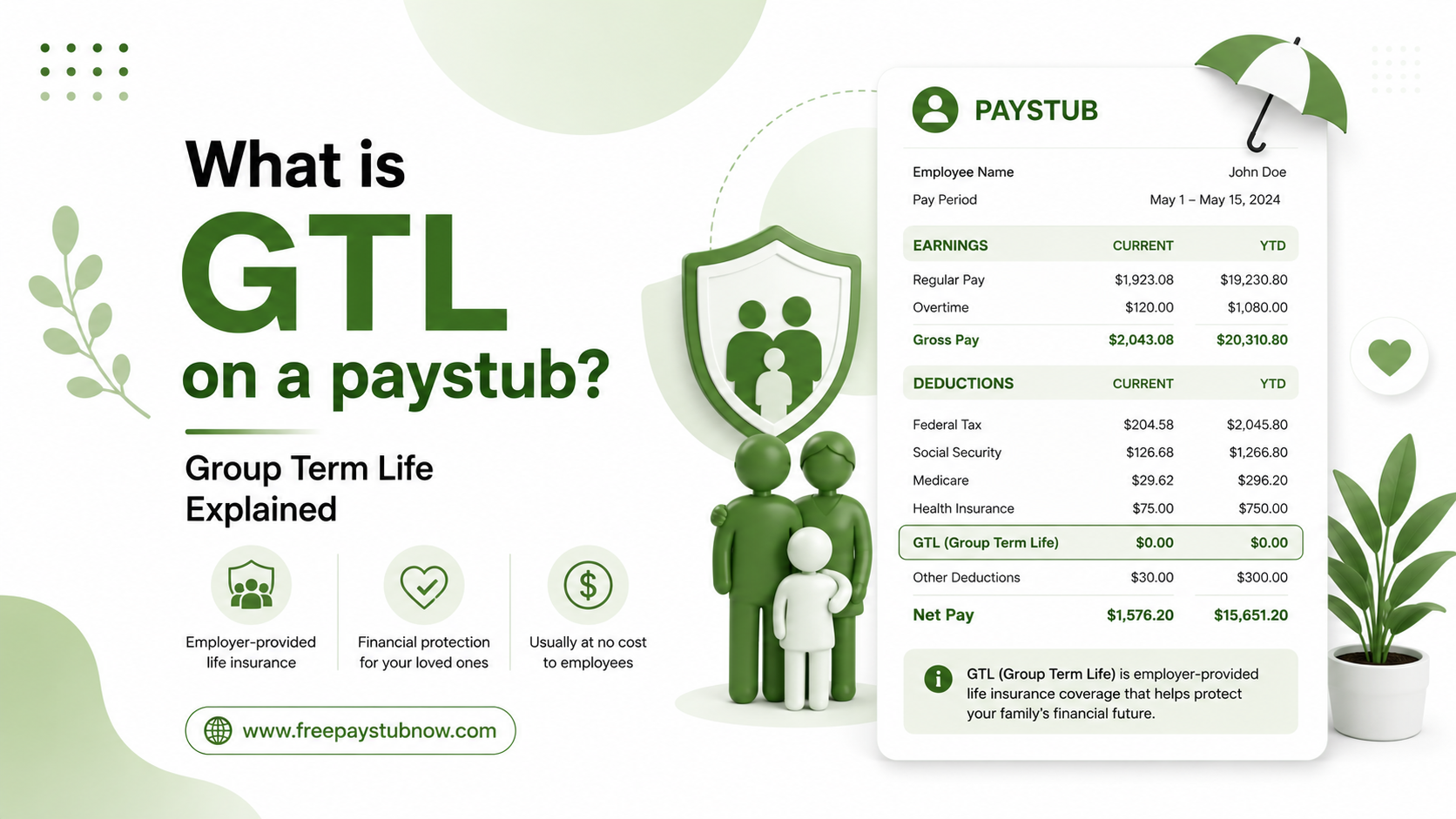
GTL: Group Term Life Insurance


STD / LTD: Short-Term Disability / Long-Term Disability


OT: Overtime


REG: Regular Pay


PTO: Paid Time Off


NET: Net pay


GROS: Gross pay


EE: Employee


ER: Employer


Why Do You Need a Pay Stub?

A pay stub is an important document that showcases how much you have earned during a pay period and deductions taken from your paycheck. Below are the common reasons why you might need a pay stub:


  • Verify your income when applying for loans, mortgages, or credit cards.
  • Rent an apartment or qualify for housing applications.
  • Track your earnings and ensure you are being paid correctly.
  • Review taxes and deductions such as federal taxes, state taxes, Social Security, and Medicare.
  • Prepare and file taxes accurately at the end of the year.
  • Verify employment history for new jobs or background checks.
  • Resolve payroll errors by comparing your earnings and deductions with company records.
  • Apply for government benefits that require proof of income.


Are Employers Required to Provide Pay Stubs?

There is no national law that demands that businesses provide an employee with a pay stub at the end of the pay period in the USA, but the FLSA requires all employers to accurately keep payroll records that include the number of hours worked, total wages paid, the pay rate given to the employee, and how much has been deducted from his/her pay and maintain such records for a minimum of 3 years from the last paycheck and must be available to the Department of Labor at all times upon request.


At the state level, most states enforce their own pay stub requirements. If your country calls for pay stubs and your employer fails to provide them, it is generally advisable to document a complaint with your nation’s Department of Labor.


If a state doesn’t have any formal law about this, employers are still strongly recommended to give pay stubs to their employees each time they get paid as a best work practice. This is not only to keep the trust of employees but also to have a solid ground against cases of payment disputes.


How to Access Your Pay Stubs?

For accessing your pay stubs, the method includes:


  • Employer Payroll Portal: Most business employers use payroll platforms like ADP, Workday, or Paychex. Employees log in with their company email ID and password to view and download current pay stubs.
  • Employee Self-Service Portal: Most of the companies integrate payroll information into a broader HR system accessible through the company app.
  • Direct Request to HR: If your employer does not have a self-service portal, you can request pay stubs directly from your HR department.
  • Physical Paycheck Envelope: Employers issue physical paychecks, which are included in the envelope along with the check.


In case you’re not able to locate your pay stub, you will need to contact your HR department immediately.


How long should you keep your pay stubs?

Keep for 1 year: Save all of the pay stubs from this year until you have reconciled your W-2 in January. As long as the figures on your W-2 match your final YTD totals, you can safely discard your monthly pay stubs from this year, but be sure to keep the last one of the year.


Keep for 3 years: Keep your year-end pay stubs and W-2s for a minimum of three years because that is the usual time period in which the IRS may conduct an audit for most taxpayers. Besides that, the FLSA also obliges employers to keep payroll records for a period of three years.


Keep for 7 years: When filing tax returns that show either business income, rental income, significant investment activity, or unusually large deductions, keep all documentation for 7 years (the duration of the auditing period set forth by the IRS).


Keep Permanently: If you ever finish looking for a W-2 that doesn’t turn up, a year-end pay stub can work as a backup record of your earnings. By keeping your final annual pay stubs forever, you are basically buying a cheap insurance policy for any time you might need it in the future.


Key Takeaways

A pay stub is much more than just an ordinary piece of paperwork. In fact, it’s one of the most crucial financial documents that you get as an employee, having a say in your present budget, future tax liabilities, retirement contributions, and even your financial standing with lenders and landlords.


Getting to know the pay stub meaning and practicing reading your pay stubs thoroughly will provide you with the means to detect mistakes, adjust your withholdings, confirm your benefits, and set a course for wiser financial decisions. Today, when payroll software does most of the figuring, mistakes can still happen. Being a knowledgeable worker can be a very effective last line of defense.


FAQs


1) What does a pay stub do?

A pay stub helps employees encrypt their paycheck stubs, as it is useful for employers while solving wage and hour disputes.


2) What do you mean by paystub?

A paystub is a paper document that summarizes an employee’s gross pay, taxes, and net pay from salary, hourly wages, or commissions.


3) What is another name for a paystub?

Another common name for a paystub is “payslip,” “wage statement,” or “salary slip.”


4) How do I get a paystub?

You can also get your pay stub from your bank if you are paid through direct deposits by your employer. Usually, you request your bank, and it will get the pay stub for you. Also, you may collect your pay stub directly from your employer’s employee website or payroll department.


5) Can I create my own pay stubs?

With our online paystub creator, you can create professional paystubs for your business.


6) What is the purpose of a pay stub?

A paystub, also called a payroll, is a report given to employees at each pay period, along with records about their gross pay, tax withholding, and any employee deductions made to their revenue. Paystubs are generally used for document protection and to ensure employees are paid correctly.


7) Is the paystub the same as a salary slip?

A pay stub, additionally called a pay slip or pay check stub or salary slip, is a document given to employees by their employers that outlines their benefits for a specific pay period in addition, additionally showing information on the gross profits, taxes, and deductions.


8) What can I use instead of a pay stub?

If you need to confirm income and don’t have traditional pay stubs, you can use financial institution statements, tax returns, or a valid organization letter. For self-employed individuals, a profit and loss (P&L) statement and 1099 paperwork are common options.


9) How to spot a fake payslip?

Seeing a fake paycheck calls for checking for formatting discrepancies, mathematical errors in tax deductions, and inconsistent agency details. Pass-reference the slip with authentic authorities’ tax portals, direct employment verifications, and genuine financial institution details to confirm authenticity.


10) How do companies verify payslips?

Companies confirm revenue slips through rigorous historical past looking at systems, combining document analysis, financial institution file assessment, and direct organization outreach. HR teams or third-party historical past verification (BGV) carriers use those primary strategies to validate files and ensure accuracy.